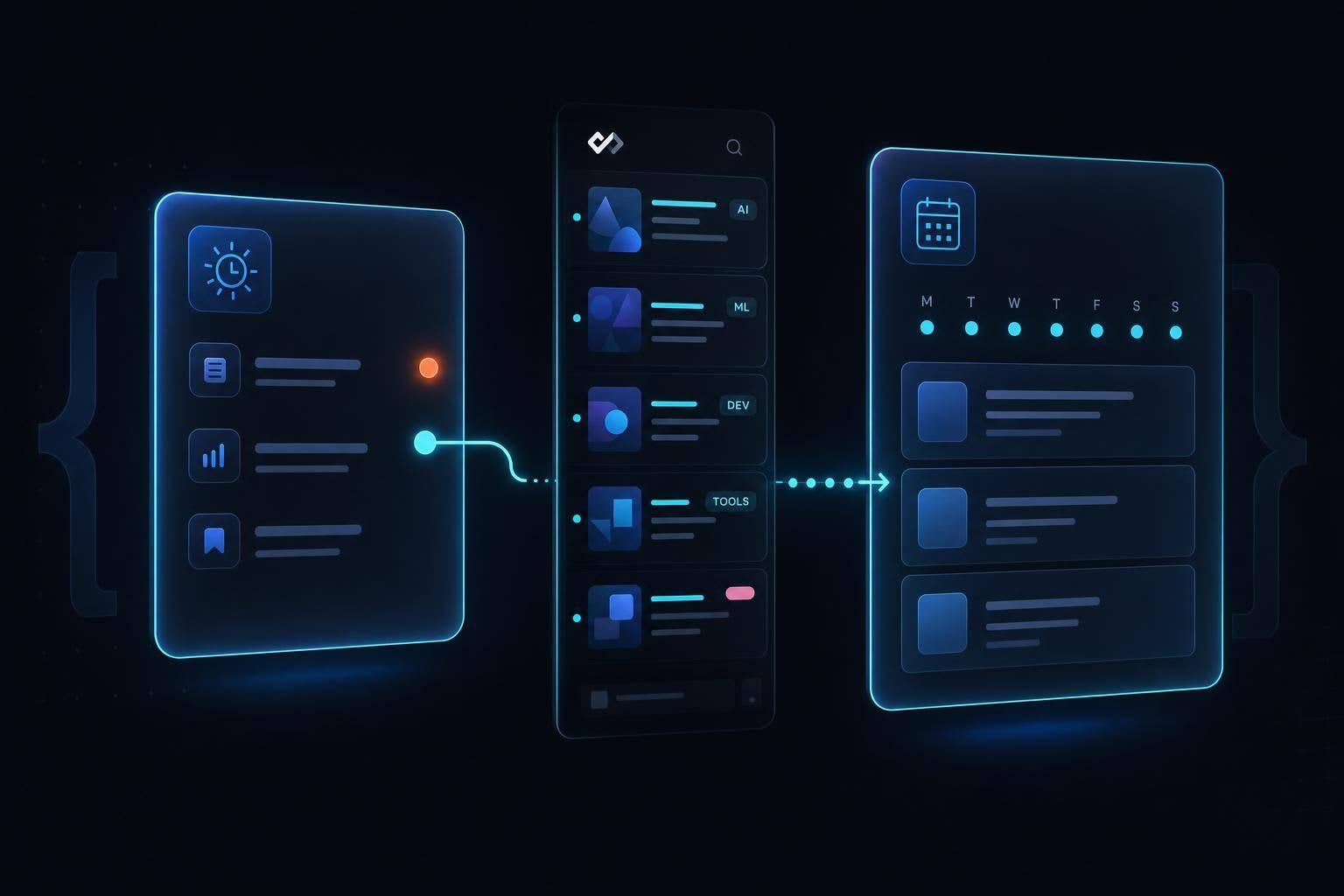
Pick one daily brief and one weekly digest to keep up with AI tools, models, and research; use daily.dev for in-between reads.
If I had to keep this simple, I’d say most AI engineers only need two newsletters: one daily and one weekly. That matters because many people spend 90–120 minutes a day trying to keep up, and most of that time gets lost to overlap.
Here’s the short version:
- I’d pick TLDR AI or Ben’s Bites for fast daily updates
- I’d pick The Batch, Import AI, or Latent Space for weekly context
- I’d use Last Week in AI for broad weekly coverage
- I’d use daily.dev between issues when I want topic-based reads, tutorials, benchmarks, or discussion threads
The main idea is simple: pick by the work you do, not by the biggest name.
If you ship features, watch tools, models, and infra. If you lean toward research, follow sources that explain what new work means and where the field is heading.
Quick Comparison
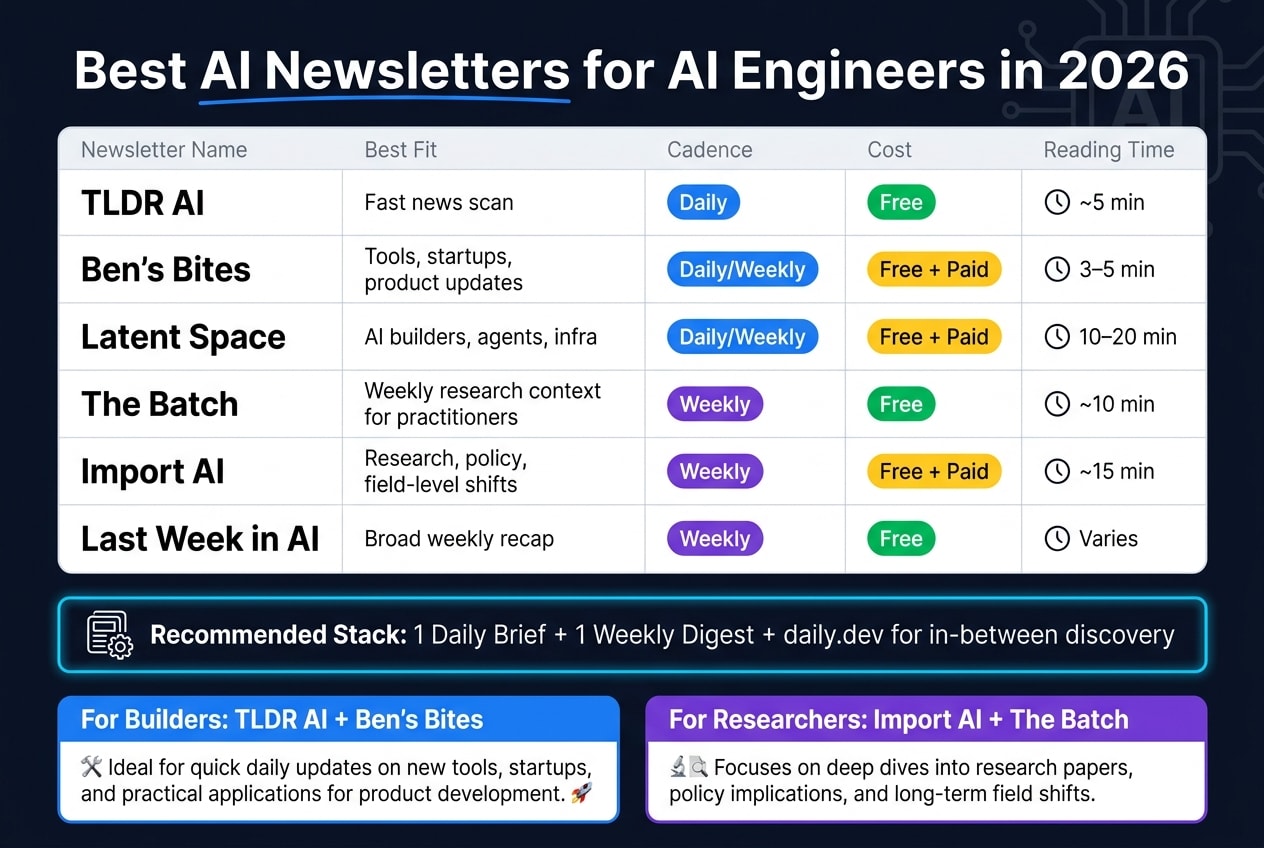
| Newsletter | Best fit | Cadence | Cost | Time to read |
|---|---|---|---|---|
| TLDR AI | Fast news scan | Daily | Free | ~5 min |
| Ben’s Bites | Tools, startups, product updates | Daily/Weekly | Free + paid | |
| Latent Space | AI builders, agents, infra | Daily/Weekly | Free + paid | 10–20 min |
| The Batch | Weekly research context for practitioners | Weekly | Free | ~10 min |
| Import AI | Research, policy, field-level shifts | Weekly | Free + paid | ~15 min |
| Last Week in AI | Broad weekly recap | Weekly | Free | Varies |
If I were setting up a low-effort reading stack today, I’d go with one daily brief, one weekly digest, and daily.dev for everything in between.
The best AI newsletters for engineers in 2026
Here are the best short-list picks by use case.
Best for product, infrastructure, and AI strategy
If you work in product, infrastructure, or strategy, start here. The next group is more about research and fast daily scanning.
Latent Space - Free
If you're building on top of models, this is the first one to read. Latent Space is the best fit for engineers who use models in products instead of training them from scratch. It covers infrastructure, agents, and AI product strategy with deep technical analysis, and it has built a large audience since launch.
Ben's Bites - Free
If you want a daily read on new tools and products, Ben's Bites is a strong pick. It tends to surface practical updates before they show up in mainstream coverage. The tone is casual, the focus is tool-heavy, and it has a big readership.
The Batch - Free
If you want weekly context without digging through a pile of sources, The Batch works well. It gives you research context each week with enough technical depth for engineers building products. It's published by Andrew Ng's DeepLearning.AI and reaches a large, broad technical audience.
Best for research, policy context, and weekly synthesis
Import AI - Free
If you care about where AI is heading at a field level, Import AI is a strong match. It covers AI research, policy, and governance in long-form issues that usually run 1,500–3,000 words. Its audience leans toward readers who want more context around technical shifts, not just the headlines.
Last Week in AI - Free
If you want one weekly recap that spans research, applications, and societal impact, Last Week in AI is a good fit. It helps when you want the big picture without following a bunch of niche sources.
Best for quick daily scanning of tools and news
TLDR AI - Free
Made for speed, TLDR AI gives you dense bullet-point summaries of papers and model launches, and industry news. It's a strong daily choice if you want a three-minute read, and it has grown into a widely read newsletter.
Next, the comparison section breaks out engineer-first picks from research-first picks.
Newsletter comparison: engineers vs. researchers
Pick by workflow, not by brand.
Here’s the quick view of how these newsletters stack up . Most engineers want one of two things: a daily brief to stay current, or a weekly roundup that connects the dots.
| Newsletter | Primary Focus | Best for | Cadence | Access | Reading Time |
|---|---|---|---|---|---|
| TLDR AI | Technical news & research | Engineers, ML practitioners | Daily | Free | ~5 min |
| Ben's Bites | Startup ecosystem & building | Engineers, ML practitioners | Daily/weekly | Free + Paid | 3–5 min |
| Latent Space | AI engineering & agents | Engineers, AI builders | Daily/weekly | Free + Paid | 10–20 min (text) |
| The Batch | Educational research synthesis | Learners, practitioners | Weekly | Free | ~10 min |
| Import AI | Policy & frontier research | Researchers, policy makers | Weekly | Free + Paid | ~15 min |
Next, narrow your choice based on one simple split: Are you shipping features, or tracking research?
Best for shipping AI features and staying current
If your work includes integrating LLMs, testing new tools, or making infra calls, three newsletters stand out: TLDR AI, Ben's Bites, and Latent Space.
TLDR AI is the fast read. It gives you dense summaries of papers and infrastructure news in about five minutes. Ben's Bites leans more toward tools, startups, and product launches. Latent Space goes deeper. It treats the AI Engineer role as its own lane, separate from ML research.
If you’re building all week, this trio covers the stuff you’re most likely to use.
Best picks for research-leaning engineers
If you care less about what launched this week and more about what new work means, Import AI and The Batch make more sense.
The Batch is weekly, free, and aimed at practitioners and learners. It helps turn research into something you can follow without needing to sift through papers all day. Import AI links frontier research with policy and safety, which makes it a better fit if you want context, not just updates.
Free options and where daily.dev fits
Every pick here has free access or a free tier.
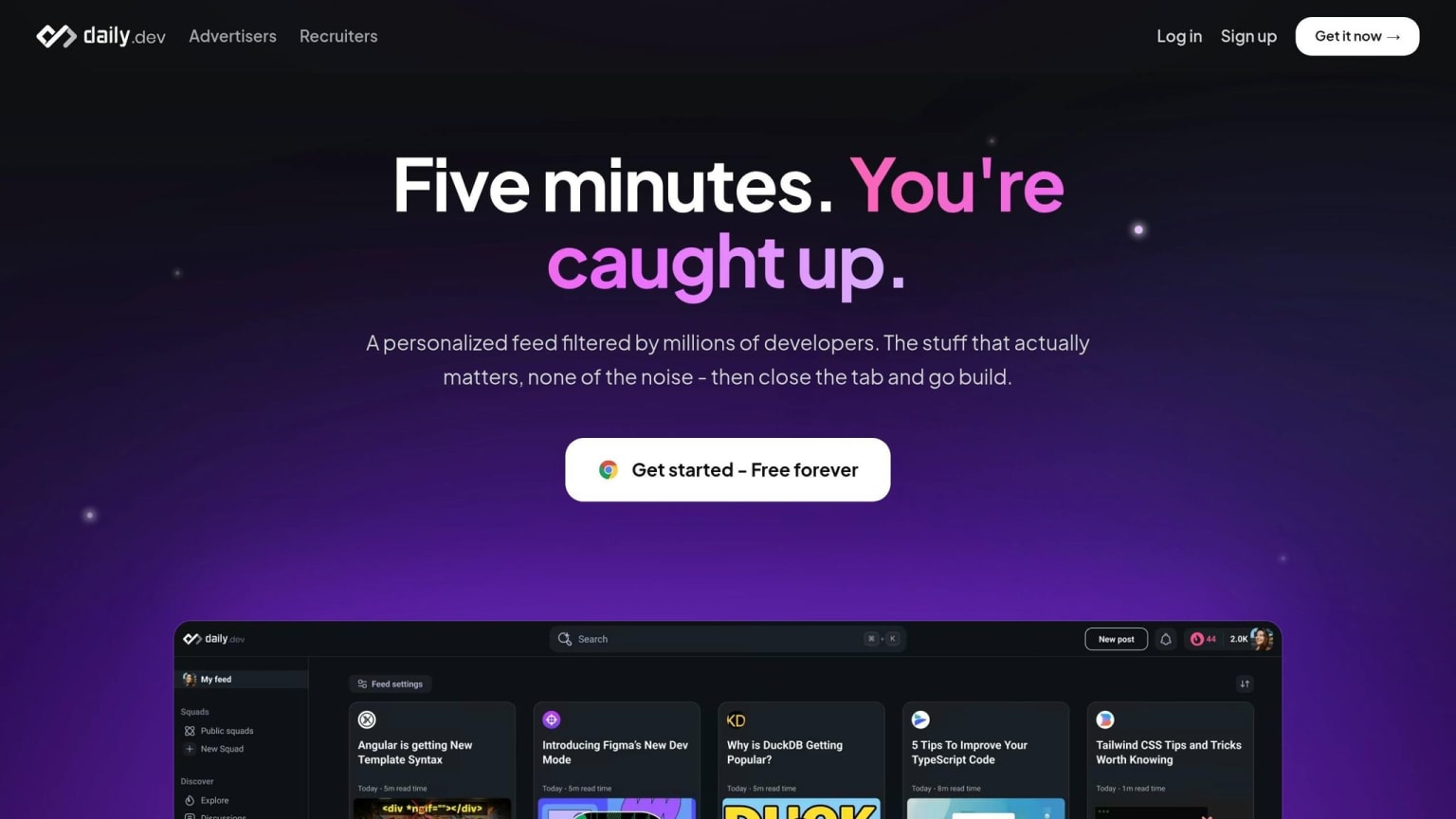
daily.dev plays a different role. It brings in tutorials, benchmarks, niche tools, and community discussions when you want them, instead of asking you to read another long email. So once you’ve picked one daily brief and one weekly digest, the next move is simple: keep the stack light.
A low-overhead AI reading stack for busy engineers
If the comparison table already trimmed your options, this is the leanest way to set up your reading stack.
Stick to 2–3 sources:
- one daily brief
- one weekly deep dive
- daily.dev for in-between discovery
That gives you enough signal without turning your inbox into a second job.
3 newsletter combinations worth trying
Your stack should fit the work you do now, not the reading habit you wish you had. Here are three simple mixes that line up with common engineering roles:
The builder stack - Ben's Bites (daily) + TLDR AI (daily) works well for engineers shipping AI features, plugging in LLMs, or sizing up new tools from week to week.
The research-heavy stack - Import AI (weekly) + Latent Space (weekly) makes sense for engineers who care less about yesterday’s launch and more about what frontier research could mean next.
The broad-coverage stack - The Batch (weekly) + Last Week in AI (weekly) is a good fit if you want broad coverage without adding a daily read.
Use daily.dev as the always-on feed between newsletter issues.
When to change your newsletter mix
As your role changes, swap one source at a time. The clearest moment to change your mix is when your reading starts feeling repetitive or pileups get out of hand.
Two signs stand out: you’re seeing the same announcement in several places, or you’ve got 40+ unread emails by Friday . That’s not better coverage. It’s overlap.
Trim the stack now and then, and keep only the sources you open.
Conclusion: the shortest path to the right AI newsletter in 2026
After lining up the options, the short answer is pretty simple: no single newsletter does it all.
For most engineers, one free daily brief and one free weekly digest are enough. Paid plans usually add archives, community access, or deeper analysis. They don’t automatically mean better coverage.
Use one daily and one weekly. That narrows the decision to the only thing that matters: which pair fits your workflow.
Choose based on how you work:
- Builders should start with TLDR AI and Ben's Bites
- Research-leaning engineers should start with Import AI and The Batch
For everything else, use daily.dev between issues to surface relevant reads and cut down on overlap.
FAQs
How do I choose between a daily and a weekly AI newsletter?
Choose based on speed vs. depth.
Daily newsletters work best when you want fast updates on breaking news, product launches, and broad industry trends. They help you stay in the loop without spending much time.
Weekly newsletters are a better fit when you want more context, analysis, and research breakdowns. They slow things down a bit and give you room to understand what matters and why.
If you want both, subscribe to one daily news source and one weekly deep dive.
Which newsletter mix works best for builders vs. research-focused engineers?
For builders, a smart combo is TLDR AI for fast technical updates and Ben's Bites for startup and product news.
If you're more research-focused, Import AI gives you longer reads on research and policy, while The Batch helps link academic papers to practical use.
When should I trim or change my AI reading stack?
Consider trimming or changing your reading stack when your subscriptions no longer match your role, or when you keep skimming because you just don’t have the time.
If your inbox feels crowded with overlapping coverage, unread emails, or the same headlines showing up again and again, that’s a clear sign to unsubscribe and tighten things up. In most cases, a curated stack of two to three newsletters is enough to give you a mix of daily news and deeper strategic or technical coverage.